Independent verification for trading firms.
Trading Integrity Bureau conducts evidence-based reviews of trading firms against the published TIB Integrity Standards. Determinations are recorded in a public registry. Scope, methodology, and findings are disclosed.
Evidence. Standards. Registry.
Built on evidence
Verification is based on analysis of trading infrastructure, payout records, and operational policies. Each verified firm is independently reviewed against defined integrity standards.
View Registry
Versioned standards
Every review is conducted against the published TIB Integrity Standards. The same criteria apply to every firm under the same engagement type — with a public changelog for every revision.
Read the standards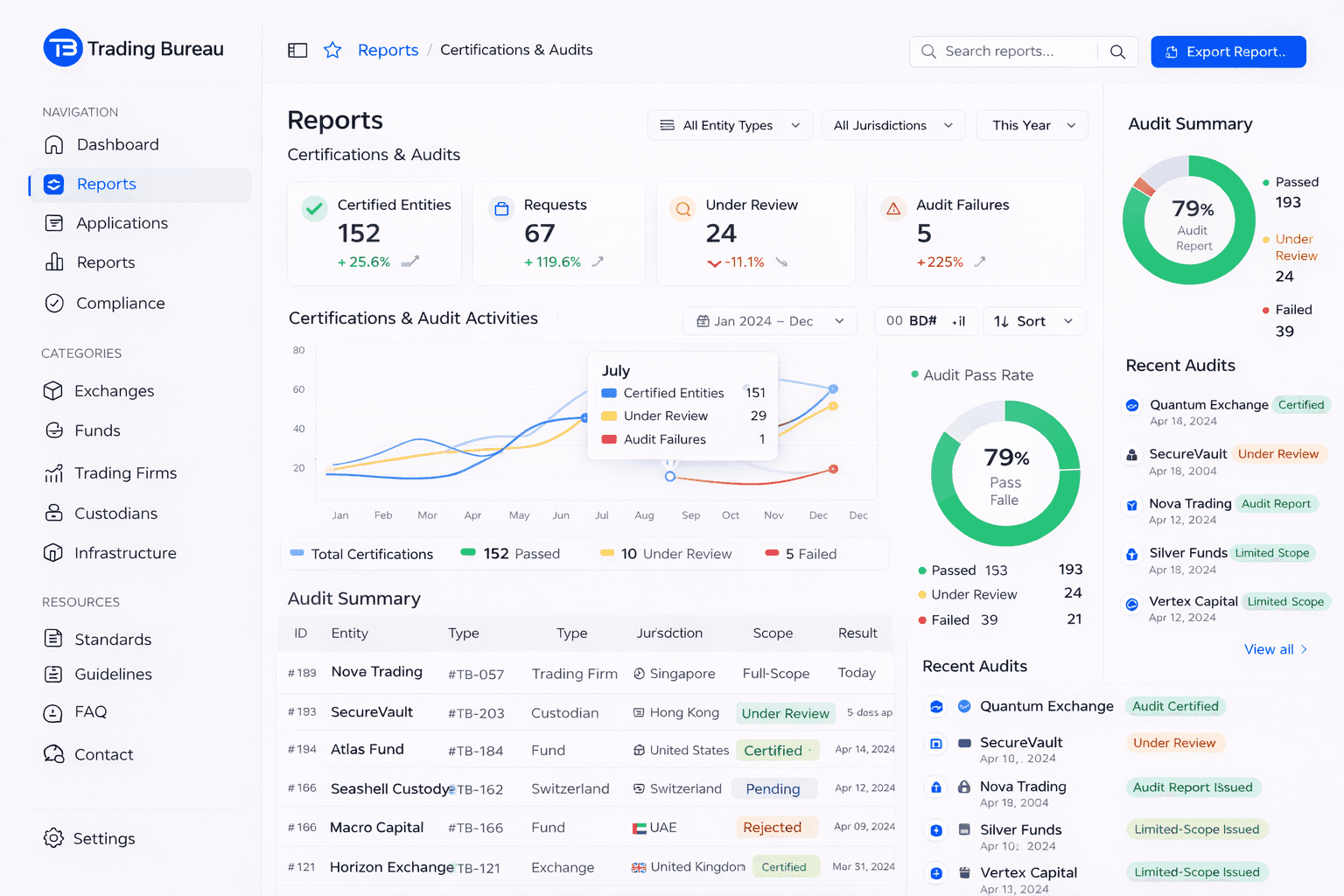
Objective transparency
Verification reports provide clear, unbiased insight into how trading firms operate, including rule enforcement, payout integrity, and operational controls.

Public registry
Access a continuously maintained registry of independently verified trading firms. Review verification status, understand operational integrity, and make informed trading decisions.
Learn more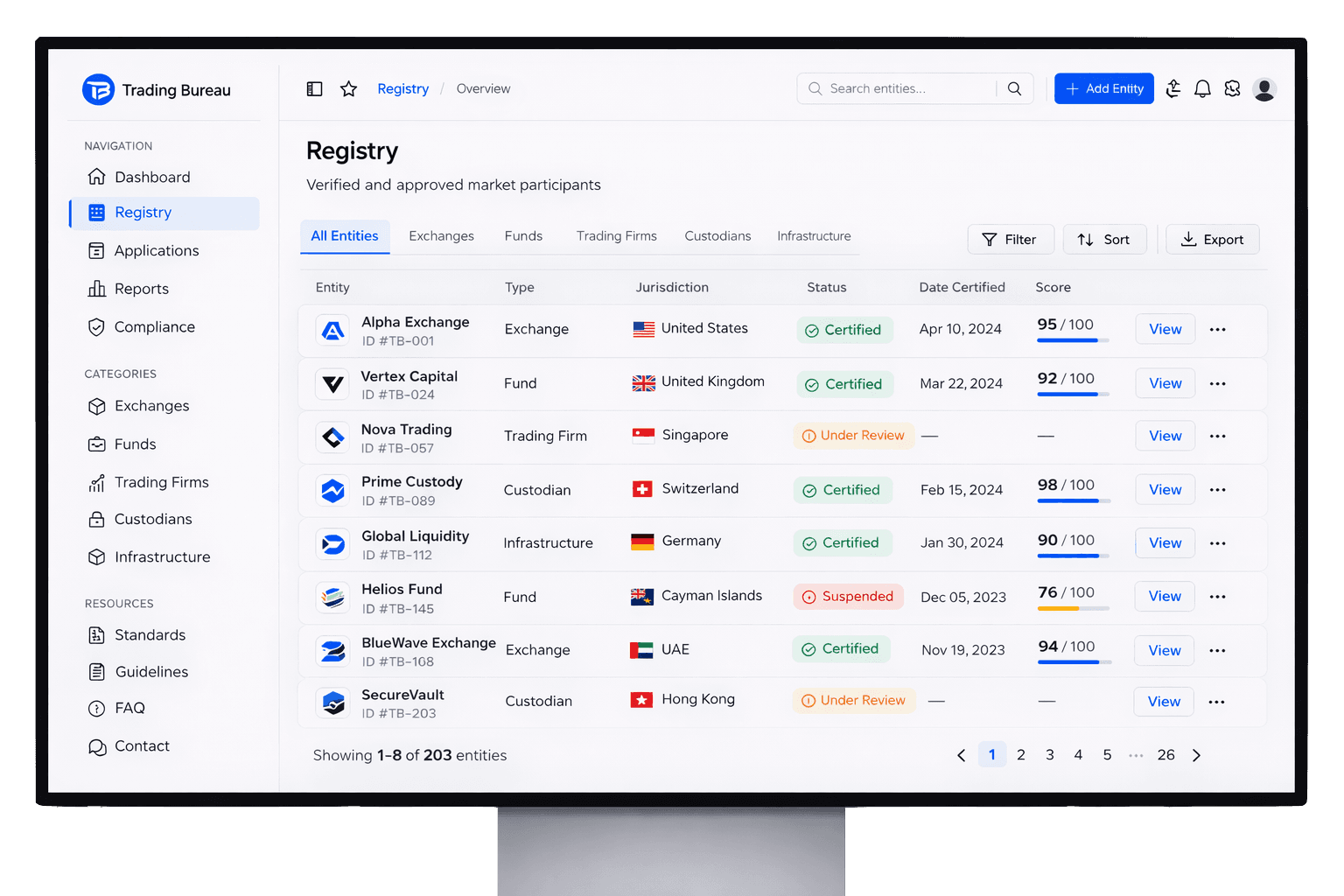
Turning operational complexity into objective verification.
Evidence review
Trading Integrity Bureau reviews trading infrastructure, operational policies, and payout processes using direct system evidence.
Independent assessment
Operational controls are evaluated against defined integrity standards to determine whether firm practices align with their stated claims.
Public verification
Verified firms are listed in the public registry with an independent verification status and transparent verification report.
Why Trading Integrity Bureau?
Verification is conducted using direct operational evidence, without influence from the firms being reviewed.
Evidence-based
Determinations are tied to primary source evidence — policies, logs, payout records, custody arrangements — not self-reported questionnaires.
Reproducible
Two independent reviewers applying the same standards should reach the same conclusion. No single-reviewer determinations.
Public registry
Every verified firm is listed with scope, standards version, and effective date. Revocations are published immediately and remain in history.
Built for traders
The registry exists to help traders understand which firms operate transparently and meet defined verification standards.
What a registry entry states.
Every entry in the public registry records the same data points. No bespoke claims, no marketing language, no negotiated wording.
Scope
or named subset for limited-scope reviews
Pillar-level determinations are Pass, Conditional, or Fail. Engagement type and standards version applied are recorded.
Effective date
with next scheduled review
Entries reflect findings at the effective date of the review. Subsequent revocations are retained in registry history.
Canonical URL
for mark-use verification
Each entry has a stable URL for participants to verify any firm's claim of TIB verification against the registry itself.